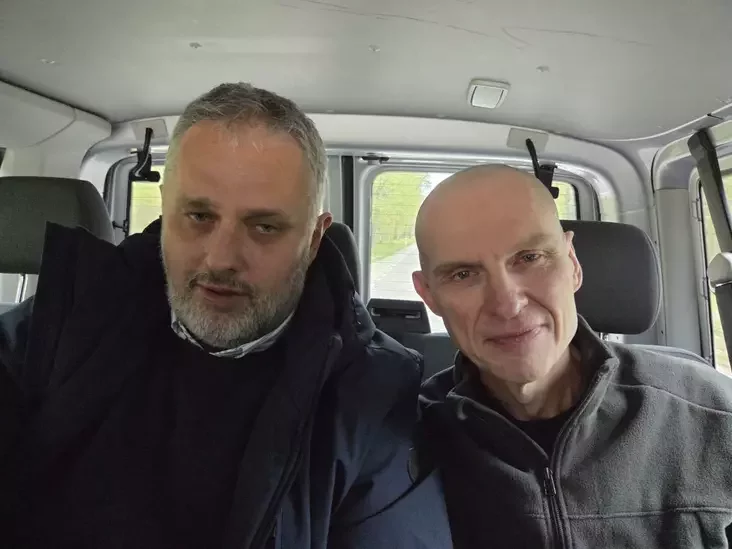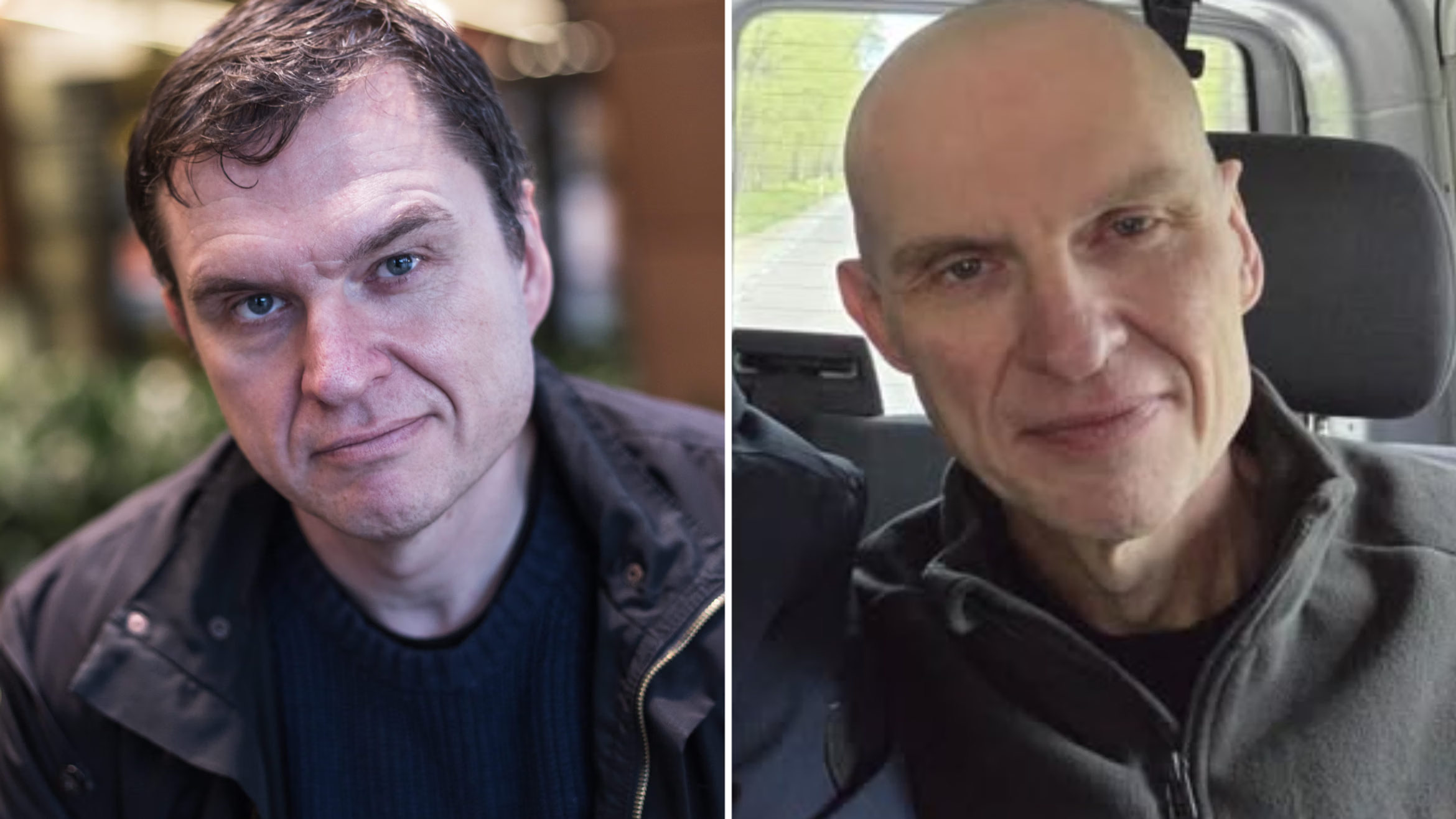
Belarusian political prisoner and journalist Andrzej Poczobut has been released after more than five years in prison as part of a large-scale international prisoner exchange involving Belarus, Russia, and European Union countries. The case is considered one of the most high-profile examples of political repression in Belarus, and its resolution was achieved after lengthy secret negotiations reportedly involving seven states.
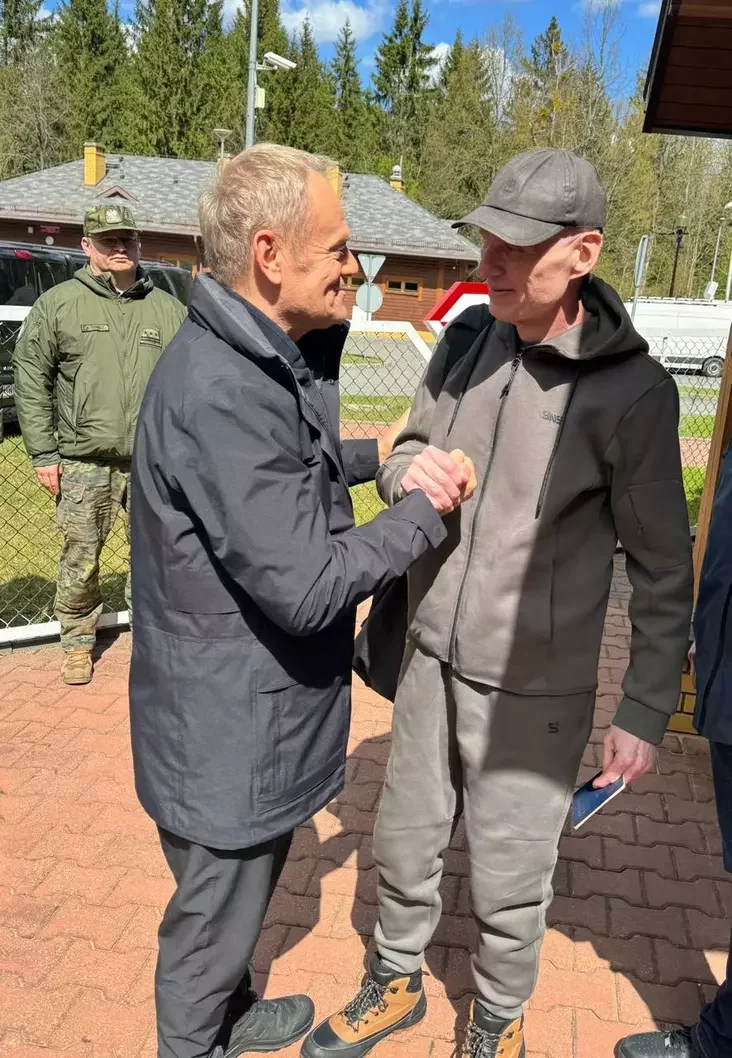
The exchange took place under a “five for five” formula at the Pererov–Białowieża border crossing in the Białowieża Forest on the Belarus–Poland border. According to Belarusian state media, it was the result of a complex negotiation process between the Belarusian KGB and the Polish intelligence service, which reportedly began in September 2025.
Poczobut was welcomed on the Polish side of the border by Prime Minister Donald Tusk, who wrote: “Welcome home, my friend.” His presence underscored the political importance of the event and the significance Poland attached to securing Poczobut’s freedom.
Andrzej Poczobut, a long-time correspondent for the Polish newspaper Gazeta Wyborcza in Grodno and a member of the Union of Poles in Belarus, was arrested on March 25, 2021. Belarusian authorities charged him with allegedly “inciting hatred” and “calling for sanctions.” Key evidence cited against him included journalistic texts in which he described the Soviet invasion of Poland in 1939 as aggression, his support for the Polish minority in Belarus, and his articles about the 2020 protests.
In February 2023, he was sentenced to eight years in a high-security penal colony. He served his sentence in Penal Colony No. 1 in Novopolotsk, where he reportedly endured harsh conditions. According to reports, he spent at least one year in a stricter disciplinary regime, underwent surgery for skin-related health issues, and suffered from arrhythmia and hypertension.
In the autumn of 2021, he refused to write a pardon request addressed to Alexander Lukashenko, remaining loyal to his principles. This decision further cemented his symbolic status as one of the most prominent faces of Belarusian resistance to the repressive regime.
Poczobut was not targeted for the first time. In 2011, he was convicted for allegedly insulting the president, and in 2012 he was arrested again over blog posts and articles for independent media outlets. On that occasion as well, he received broad international support. His release was publicly demanded even by then U.S. President Barack Obama.
Throughout his career, Poczobut received numerous awards for journalism, including the Grand Press Journalist of the Year title in Poland and several prizes for freedom of speech and human rights. He is also the author of the book System Belarus, in which he analyzes the gradual transformation of Belarus into an authoritarian state under Lukashenko’s rule.
His release marks an important diplomatic breakthrough, but it also raises questions about the price of such agreements. In exchange for the release of five individuals, including three Polish and two Moldovan citizens, European states handed over five persons arrested in various EU countries, including individuals linked to espionage activities.
The case of Andrzej Poczobut remains a symbol of the struggle for freedom of speech, historical memory, and the rights of national minorities in Belarus. His return to freedom is a significant victory, but it does not signal the end of repression, which continues to define the lives of many political prisoners in the country.