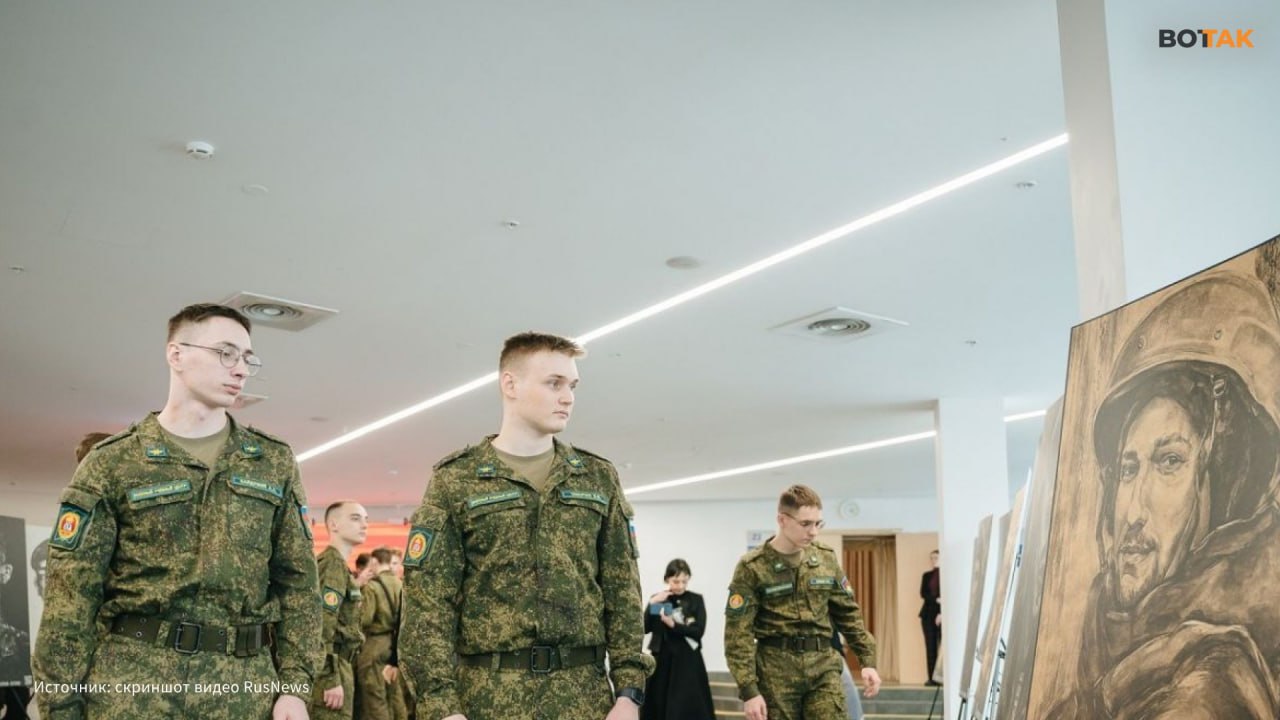
At least 57 Russian universities and 13 vocational colleges are conducting public agitation to encourage students to sign contracts with the Ministry of Defense for the war against Ukraine, according to data published by the Russian outlet "Echo."
According to the publication's findings, recruitment campaigns are taking place in at least 23 Russian regions, as well as in annexed Crimea. St. Petersburg leads with the highest number of involved institutions (19), followed by Moscow (13), Tatarstan (6), the Novosibirsk region (5), and the Krasnodar Territory (4).
In some instances, signing a contract is presented as a "major life start." This phrasing is used by the Plekhanov Russian University of Economics, which offers service "without interrupting studies" and a transfer to state-funded (tuition-free) spots. St. Petersburg State University promises volunteers a one-time payment of 50,000 rubles (approx. $500/€500) and the opportunity to resume education later. The Higher School of Economics (HSE) guarantees academic leave, while the Russian Technological University (MIREA) offers to write off academic debts.
However, "Echo" reports that agitation is often accompanied by pressure. Students are frequently mandated to attend meetings with military recruitment officers and warned of disciplinary action for failure to show up. In some cases, students who refuse to sign are called "cowards," and propaganda films about "traitors" are shown—a practice reportedly used at the Novosibirsk College of Transport Technologies. Underperforming students are summoned by administrators and threatened with expulsion.
Recruitment is primarily focused on newly formed unmanned system units. These are marketed as "high-tech" and "elite" units, and students are told they can sign one-year contracts. However, Artyom Klyga, head of the legal department of the "Movement of Conscientious Objectors," stated that service effectively becomes indefinite: under Vladimir Putin’s mobilization decree, contracts are automatically extended until the end of the war.
Furthermore, standard contract annexes cited by "Echo" reveal that assignment to drone units is not guaranteed. The Ministry of Defense reserves the right to establish a "probationary period" to evaluate a soldier's fitness for UAV work, after which they may be transferred to other units, including the infantry.
"Signing a contract for service in unmanned system units is legally no different from signing a contract under pressure in a pre-trial detention center or a military base. There are no legal guarantees of returning alive, nor any guarantees of resigning at will," Klyga said.
Political scientist Ekaterina Schulman also urged students not to trust advertising promises. According to her, once a contract is signed, an individual is entirely at the disposal of the Ministry of Defense and has no ability to decline service or contest an assignment to a specific unit.
"There is no way back. It is a one-way ticket," Schulman concluded.