Warning: This article contains disturbing descriptions of violence, torture and war crimes.
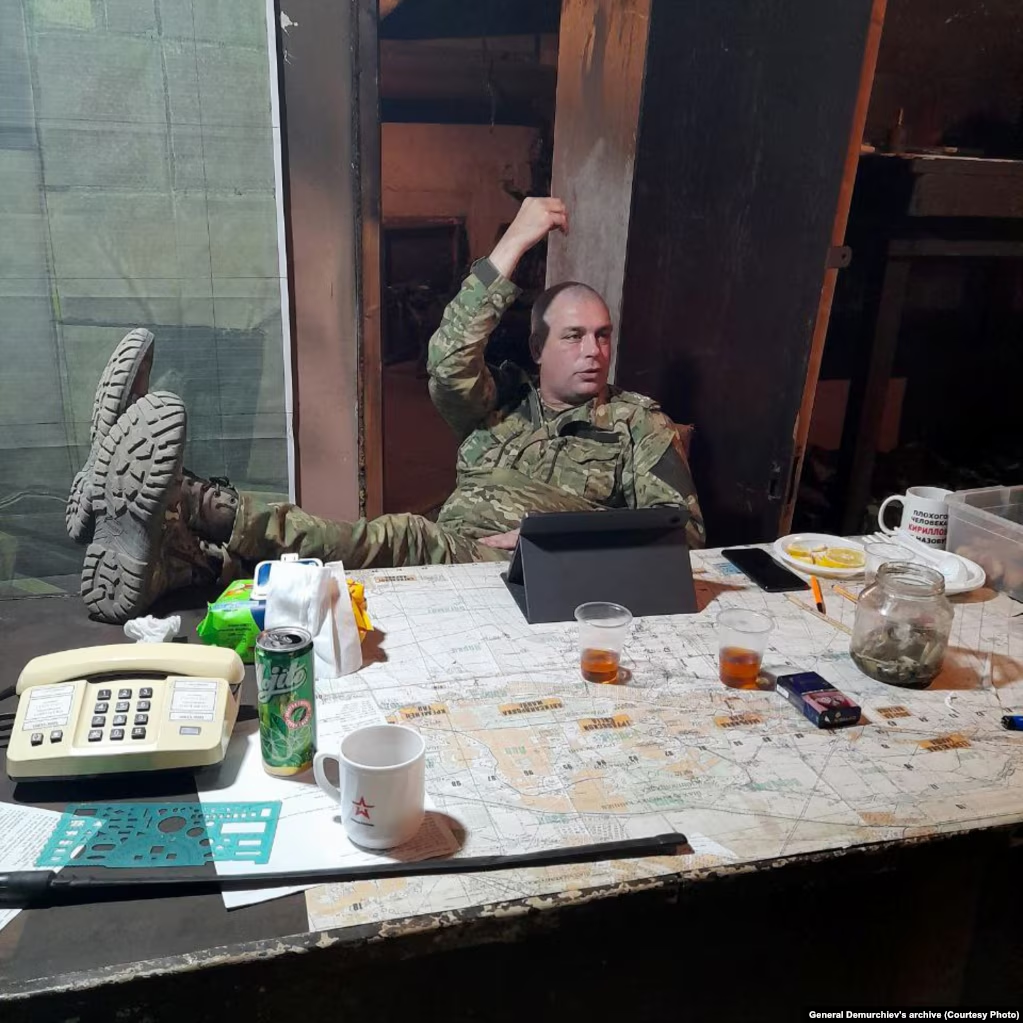
A senior Russian military commander, Major General Roman Demurchiev, allegedly boasted in private messages about torture, executions, and mutilation of Ukrainian prisoners of war. The messages, reportedly exchanged between 2022 and 2024, describe acts that, if verified, constitute serious violations of international humanitarian law.
According to the archive of correspondence examined by investigative journalists, Demurchiev shared photos and voice messages with colleagues, friends, and even his wife. In one exchange, he reportedly sent an image showing severed human ears and joked about making a “garland” out of them. His wife replied with dark humor, comparing them to “pig ears for beer.”
These conversations were not public statements. They were private messages — but they reveal a mindset.
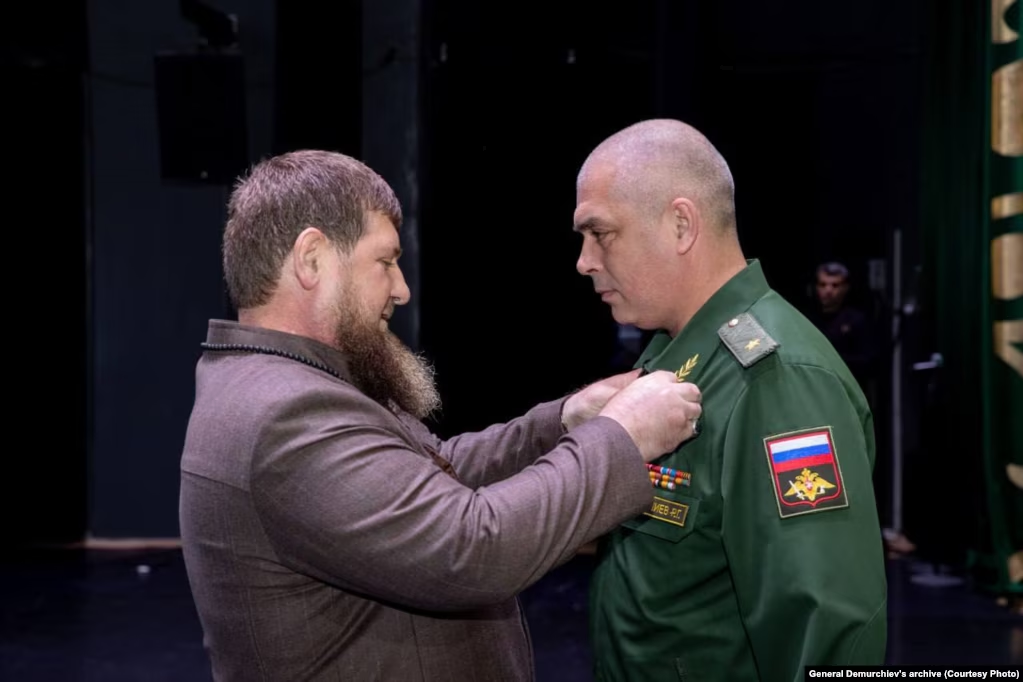
At the time of these messages, Demurchiev held a high-ranking position within Russia’s 20th Combined Arms Army. In 2023, he was promoted to major general by Vladimir Putin. He also reportedly received an award from Chechen leader Ramzan Kadyrov.
War Crimes and Command Responsibility
The alleged acts described in the correspondence include:
Execution of prisoners of war.
Torture during interrogations.
Mutilation of bodies.
Mockery and humiliation of captives.
Discussion of “disposing” of prisoners.
Under the International Committee of the Red Cross framework and the 1949 Geneva Conventions, prisoners of war must be protected from violence, intimidation, insults, and public curiosity. Killing, torture, and mutilation are grave breaches of international humanitarian law.
Command responsibility means a military commander can be held accountable not only for ordering crimes, but also for knowing about them and failing to prevent or punish them.
If the correspondence accurately reflects real events, it suggests not only individual cruelty but also systemic tolerance — or even encouragement — of abuse.
The Chechnya Connection
Some of the messages reportedly referenced earlier experiences in the Second Chechen War. Both Demurchiev and other senior officers involved had previously served in Chechnya. During that conflict, human rights organizations documented allegations of torture, enforced disappearances, and mutilation.
The normalization of brutality during earlier wars may have shaped attitudes seen in the current conflict.
Prisoners as “Gifts”
In several conversations, Demurchiev allegedly discussed transferring captured Ukrainians to military counterintelligence officers. In one exchange, a prisoner was described as a “gift.” Another message reportedly asked whether to “dispose of” a detainee or hand him over.
One Ukrainian soldier identified in the materials reportedly spent nearly two years in captivity before being exchanged. Through relatives, he later confirmed he had been severely beaten and subjected to electric shocks.
These are not battlefield actions in the heat of combat. These are controlled environments — detention, interrogation, custody.
That distinction matters legally and morally.
Culture of Dehumanization
In addition to accounts of violence against prisoners, the correspondence reportedly contained videos and jokes mocking torture — even of animals. The tone in many messages mixed cruelty with sarcasm, insults, and ethnic slurs.
When soldiers or commanders start to joke about violence, something deeper is wrong. War dehumanizes. But leadership determines whether discipline collapses or standards hold.
Victims and Heroes
The victims in these reports are Ukrainian prisoners of war — individuals protected under international law. Some survived captivity. Others reportedly did not.
At the same time, thousands of Ukrainian soldiers continue to resist despite overwhelming force. Their defense of their territory has become a defining element of modern European history.
Not every soldier is a criminal. Not every commander tolerates abuse. But when crimes are ignored — or rewarded — the line between individual guilt and institutional responsibility becomes blurred.
Why This Matters
This is not only about one general. It is about:
The treatment of prisoners.
The responsibility of command.
The moral boundaries of war.
The long-term consequences of impunity.
If proven in court, such acts would qualify as war crimes. Investigations by international bodies may take years. Political realities may delay accountability.
But documentation matters.
For readers in Slovenia, Croatia, Serbia, the United Kingdom, or anywhere else — the principle is simple and universal:
Even in war, there are rules.
When those rules are broken, the damage goes beyond the battlefield. It shapes how history remembers the perpetrators — and how victims are honored.
Brutality may bring fear in the short term.
It never brings legitimacy in the long term.