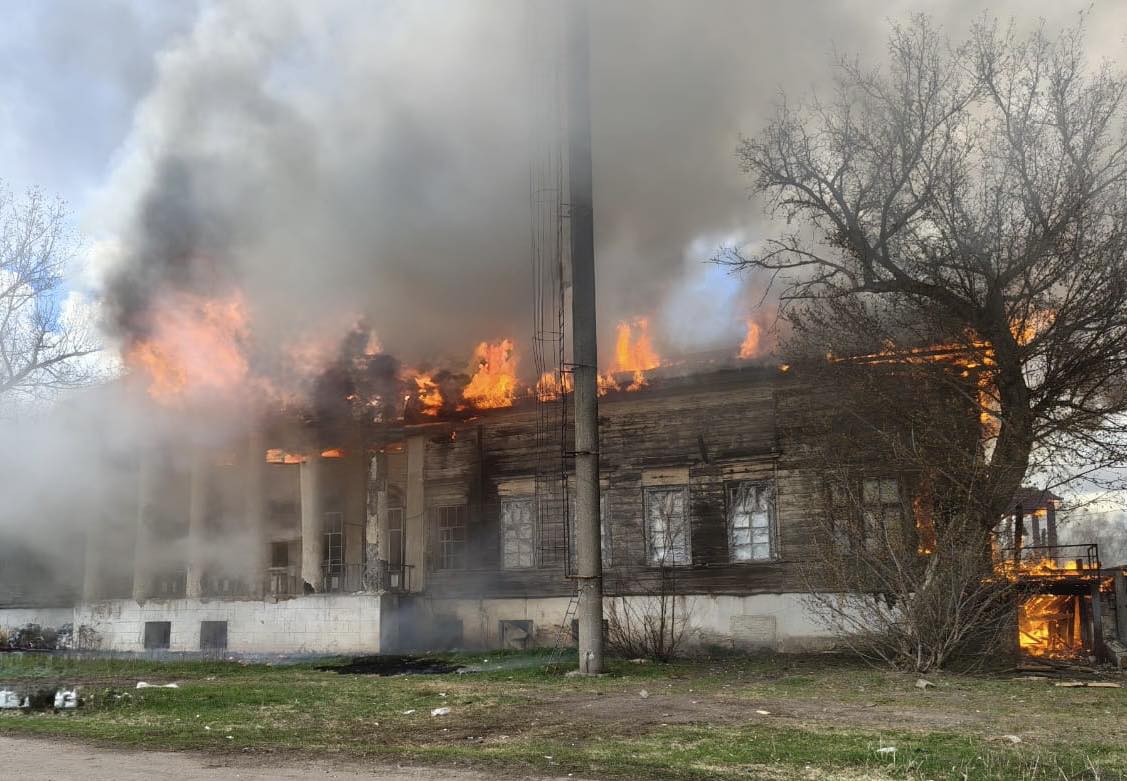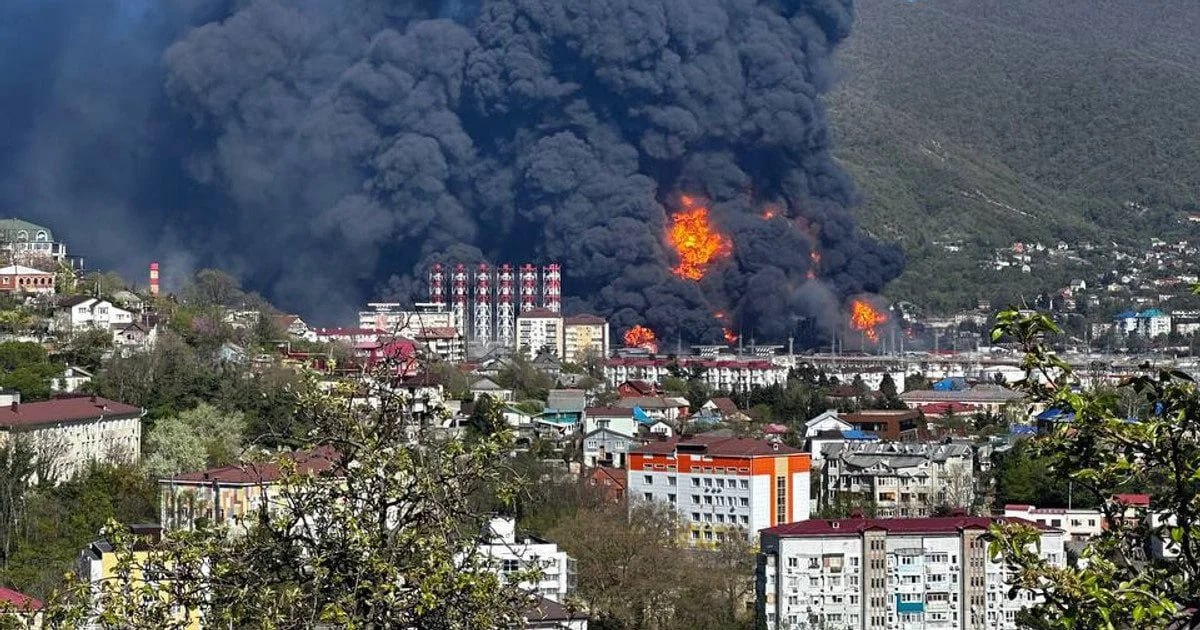
The Russian city of Tuapse, on the Black Sea coast, has been living for almost two weeks with the consequences of a series of drone attacks on local oil infrastructure. The targets were an oil refinery and port facilities located in close proximity to residential districts. According to available information, facilities in Tuapse were hit at least three times — on 16, 20 and 28 April — and the latest attack again caused a major fire and the evacuation of residents from nearby streets.
The environmental consequences are causing the greatest concern. After the earlier fires, residents reported thick black smoke, soot, a heavy smell of burning and so-called “oil rain”. Footage and reports from the city show that petroleum products entered the Tuapse River and then the sea. Some independent environmental experts warn that the real scale of the pollution may be greater than the local authorities admit.
Air pollution is also a serious problem. Reports state that concentrations of benzene, xylene and soot exceeded permitted levels. Residents were advised to close their windows, go outside less often, use masks and rinse their noses, eyes and throats. According to local and independent media, masks quickly began disappearing from pharmacies, while some residents complained of headaches, dizziness and other symptoms.
Municipal services, firefighters and volunteers are working on the ground. Contaminated sand, gravel and mazut are being removed, but available descriptions from the coast suggest that the work is extensive and that local resources are insufficient. The sea continues to wash mazut onto parts of the coastline, while larger pieces of oil waste can also be seen in the water.
The federal authorities became more visibly involved in the response only after the new attack on 28 April. Putin said that strikes on energy facilities in Tuapse could cause serious environmental consequences, but at the same time stated that the governor of Krasnodar Krai had informed him that there were “no serious dangers” and that local services were coping with the situation.
For the residents of Tuapse, however, the crisis is already a daily reality: fires, evacuations, polluted air, traces of oil in the river and the sea, and uncertainty over how long the clean-up will take. The city, both industrial and coastal, is now facing the consequences of a war that is affecting the environment and people’s health far from the front line.
It is increasingly being said that Tuapse is a “new Chernobyl”. The comparison refers above all to the feeling that a catastrophe is unfolding before residents’ eyes while the authorities play down its significance, react late and try to control information. As after Chernobyl, people are most afraid of what they cannot immediately see: toxic substances in the air, water, soil and food, as well as possible consequences that will only become apparent later. In this situation, the comparison with Chernobyl acquires clear political and human weight: it speaks of a city left to smoke, poison and uncertainty, while residents are asked to trust the same authorities that have already left them without convincing answers.