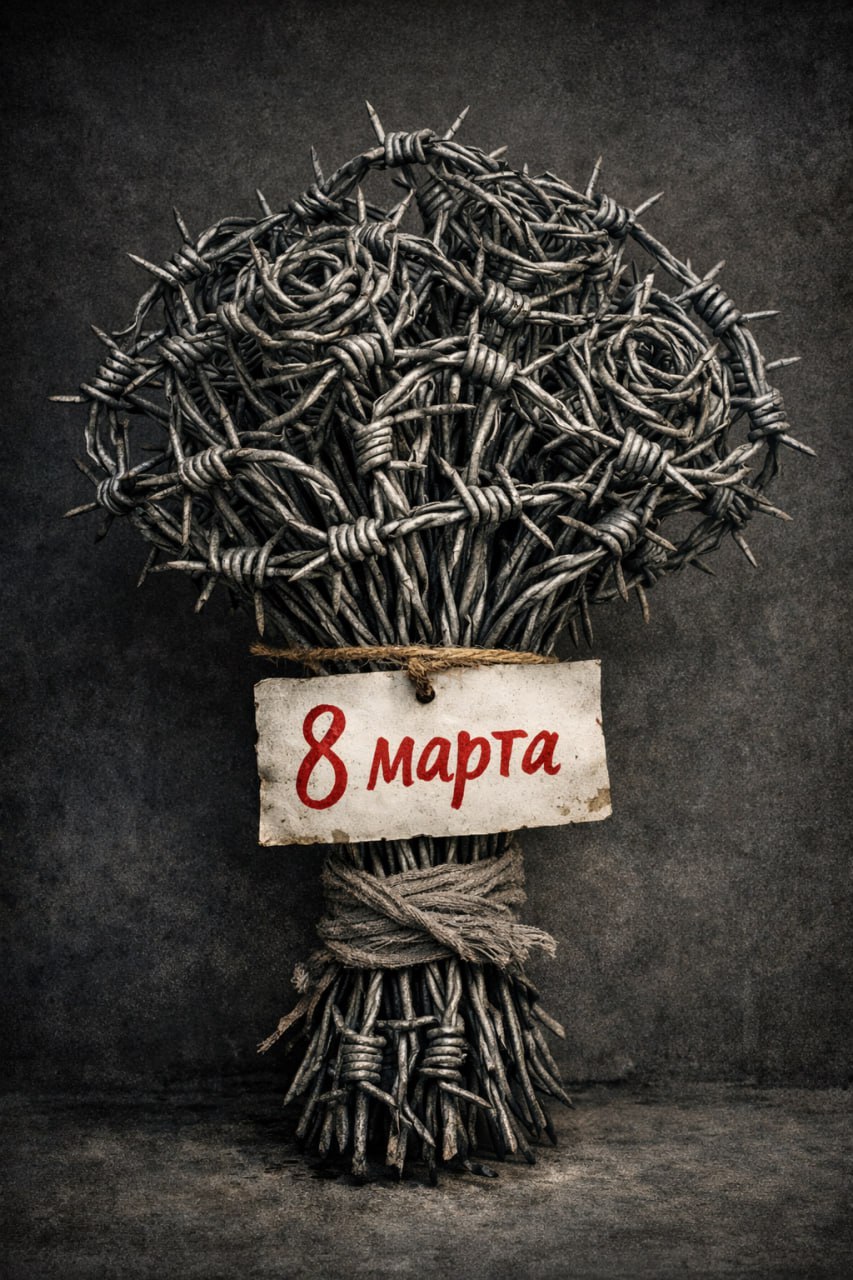
While 8 March is celebrated in many countries as a day dedicated to women’s rights and their struggle for equality, in Russia and Belarus the date is marked by the reality that hundreds of women have ended up in prison or under pressure from the authorities because of their political views.
According to Russian human rights organisations, 188 women are currently imprisoned in Russia for political reasons, while a total of 774 women face politically motivated persecution. Some are under house arrest, while others have been forced to leave the country in order to avoid criminal prosecution.
A similar situation exists in Belarus. According to the Belarusian human rights centre Viasna, at least 166 women in the country are currently imprisoned as political prisoners, representing about 14 percent of the total number of political detainees. The total number of political prisoners in Belarus exceeds 1,200. Over the past five years, at least 650 women have received the status of political prisoner, and the number continues to grow due to new arrests.
Human rights organisations also warn about harsh prison conditions and numerous violations of the rights of female detainees. According to their reports, women in detention frequently face isolation, lack of adequate medical care and additional pressure from prison administrations.
Political repression, however, affects not only the women behind bars but also their families. Mothers send packages with food and medicine to sons in prison, wives travel thousands of kilometres to obtain brief visits in detention centres or penal colonies, and daughters grow up knowing by heart the criminal code articles under which their parents have been convicted.
For many of these women, International Women’s Day is no longer just a symbolic holiday but a reminder that fundamental rights — such as freedom of speech, the right to protest and the right to a fair trial — must once again be defended. Their daily struggle, often quiet and unseen, has become part of a broader story about political repression in the region.