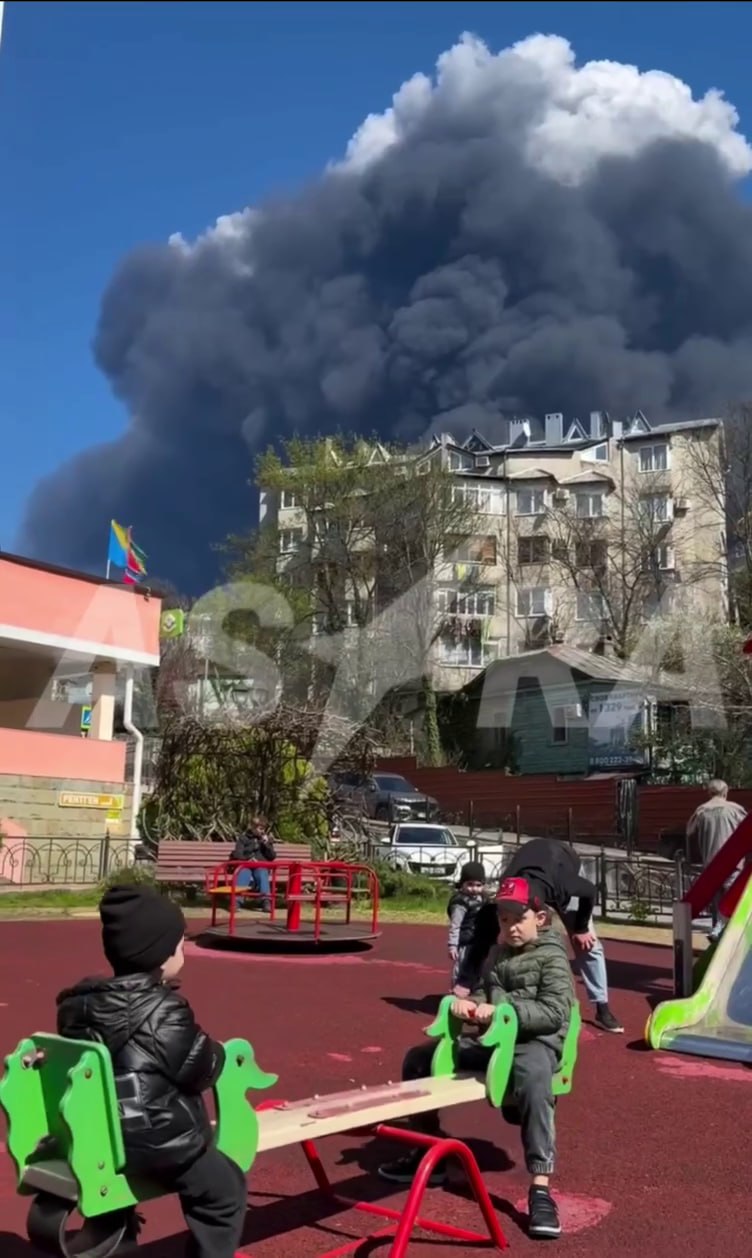
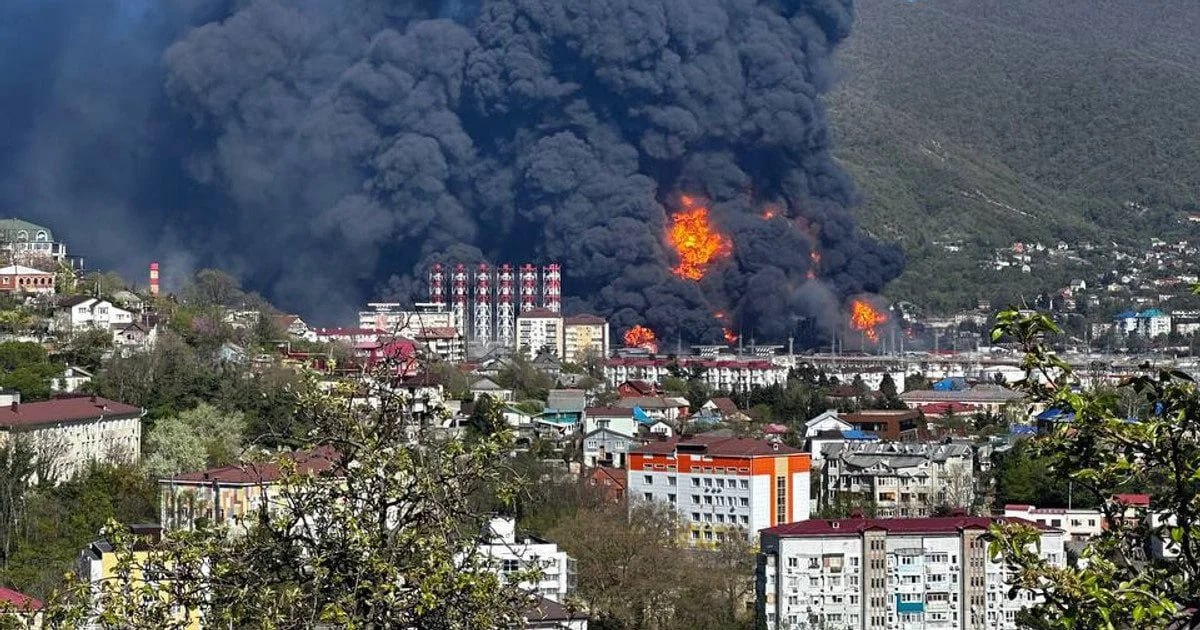
The Russian city of Tuapse, a port on the Black Sea coast, has for weeks been living with the consequences of strikes on oil infrastructure. After several attacks on the refinery and port facilities, storage tanks caught fire, and the city was covered in smoke, soot and the heavy smell of burning oil. Residents speak of “oil rain” — black, greasy drops left on clothes, cars, windows and skin.
Tuapse is an important part of Russia’s oil industry. Facilities like these handle fuel, exports and the money that fills the budget for the war against Ukraine. That is why Ukrainian strikes on oil infrastructure are part of a broader strategy: to hit the system that enables Moscow to send missiles and drones at Ukrainian cities every day.
The most dangerous part of this catastrophe is not immediately visible. After oil burns, substances remain in the air that can seriously damage human health. Benzene, xylene and soot are mentioned in particular. Benzene is known as a carcinogenic substance, linked to leukaemia and other diseases of the blood and bone marrow. Soot from burning oil may contain polycyclic aromatic hydrocarbons, including extremely dangerous compounds.
For children, this kind of exposure is especially risky. They breathe faster than adults, their lungs are smaller, and their bodies are still developing. What an adult may feel as a burning sensation in the throat, a heavy smell or a headache may have deeper consequences for a child. Elderly people, chronically ill patients and people with heart, lung or blood disorders are also among the most vulnerable. For them, toxic air brings a real health risk.
Schools in Tuapse have been closed. Kindergartens are operating with restrictions. Residents are advised not to open windows, to carry out wet cleaning, to use masks and to rinse their nose, eyes and throat. These are instructions given to people in the zone of a serious technological accident. Yet Moscow refuses to declare a federal environmental emergency. Such a decision would mean acknowledging the scale of the disaster, accepting an obligation to provide more serious assistance and raising the question of compensation for damage.
The problem does not stop at Tuapse. According to available information, oil has entered the Tuapse River, then the Black Sea, and the slick has spread along the coast. Tourist towns in the wider area are now entering the season with questions that no one can calmly ignore: is the sea safe, is the air safe, is it safe to bring children there?
A similar scene then appeared in Perm, a city of about one million people in the Urals, far from the Ukrainian front. After a strike on an important station in Russia’s oil pipeline system, smoke, sirens, a closed airport and the same warnings to residents to spend less time outdoors appeared over the city.
The war that Putin launched against Ukraine is returning to Russian cities through burning refineries, toxic air and the fear of parents who do not know whether they may let their child go outside. The Kremlin repeats that everything is under control. But control does not look like this when schools are closed, when children’s time outside is restricted and when entire cities are breathing substances linked to cancer.
Putin could break this cycle at least through an agreement to mutually suspend strikes on energy infrastructure. He does not do so. For him, attacks on Ukraine are more important than the air breathed by the people of Tuapse and Perm. A war to the last Russian.
 style="height: 190px; object-fit: cover;">
 style="height: 190px; object-fit: cover;">
 style="height: 190px; object-fit: cover;">